
BUSINESS & INVESTMENT

BUSINESS & INVESTMENT IN CAMBODIA
An open, market-driven economy offering strong legal protection and competitive incentives for investors.
Cambodia provides a liberal and investor-friendly business environment supported by transparent laws, equal treatment for foreign and domestic investors, and simplified investment procedures. The Royal Government of Cambodia actively promotes sustainable economic growth by encouraging investment across priority sectors, ensuring policy stability, and maintaining an open market economy.
With no restrictions on foreign ownership, free pricing mechanisms, and unrestricted capital repatriation, Cambodia continues to position itself as a strategic destination for global investors.








Growth
Investor Protection
Open Economy
Market-driven

The Ministry of Foreign Affairs & International Cooperation provides details on Doing Business in Cambodia https://www.mfaic.gov.kh/doingbussiness Conducive Investor Climate
For understanding the Business Environment in Cambodia, kindly find relevant reports attached:
BUSINESS & INVESTMENT
Chambers of Commerce in Cambodia:
Associations in Cambodia:
Cambodia Chamber of Commerce
The Australian Chamber of Commerce
European Chamber of Commerce
The American Chamber of Commerce
Indian Chamber of Commerce
Cambodian Chinese Chamber of Commerce
Singapore Business & Investment Forum
Malaysian Business Chamber of Commerce
Japanese Business Association of Commerce
International Business Chamber
French Chamber of Commerce & Industry in Cambodia
Youth Entrepreneurs Association of Commerce
Textile, Apparel, Footwear & Travel Goods Association in Commerce
Cambodia Hotel Association
Cambodia Association of Travel Agents
Cambodia Women Entrepreneurs Association
Top commodities imported and exported between Cambodia and India:
Emerging sectors in Cambodia:



OPEN ECONOMY
Open, transparent, and investor-friendly economic environment
COMPETITIVE INCENTIVES
Qualified Investment Projects (QIP) are entitled to generous incentives such as:
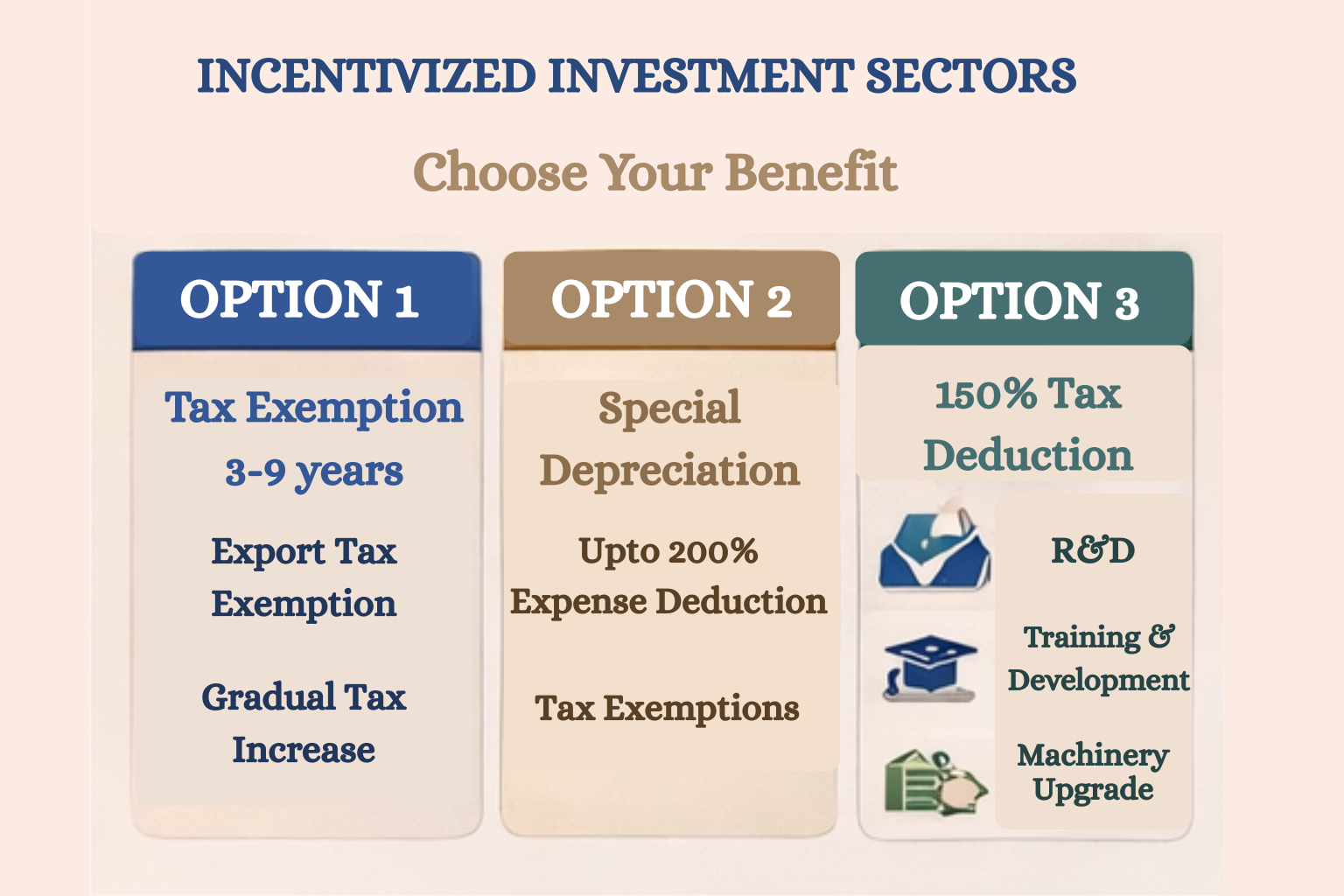
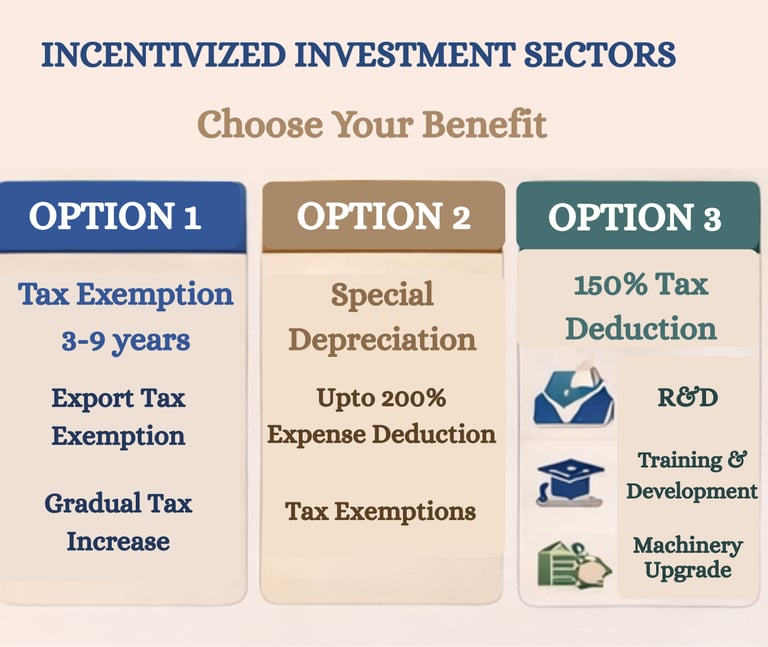
Income tax exemption for up to 9 years or special depreciation
Export tax exemption
Full import duty tax exemption (construction material, equipment, production inputs)
Value-added tax exemption for local production inputs
150% tax deduction for R&D, innovation, training, employee welfare facilities & services, machinery upgrading
An investor also has the right to deduct capital expenditure through special deduction as stated in the tax provisions in force. Eligibility of deducting upto 200% of specific expenses incurred for upto 9 years, as determined by the law on Financial management and/or the Sub-Decree. 150% tax deduction on the following activities- R&D Innovations, Training, Employee Welfare Facilities, machinery upgradation
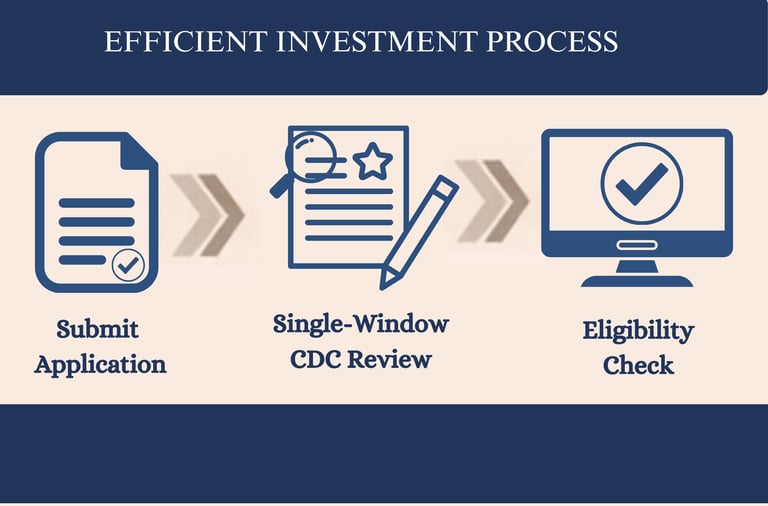
EFFICIENT PROCESS
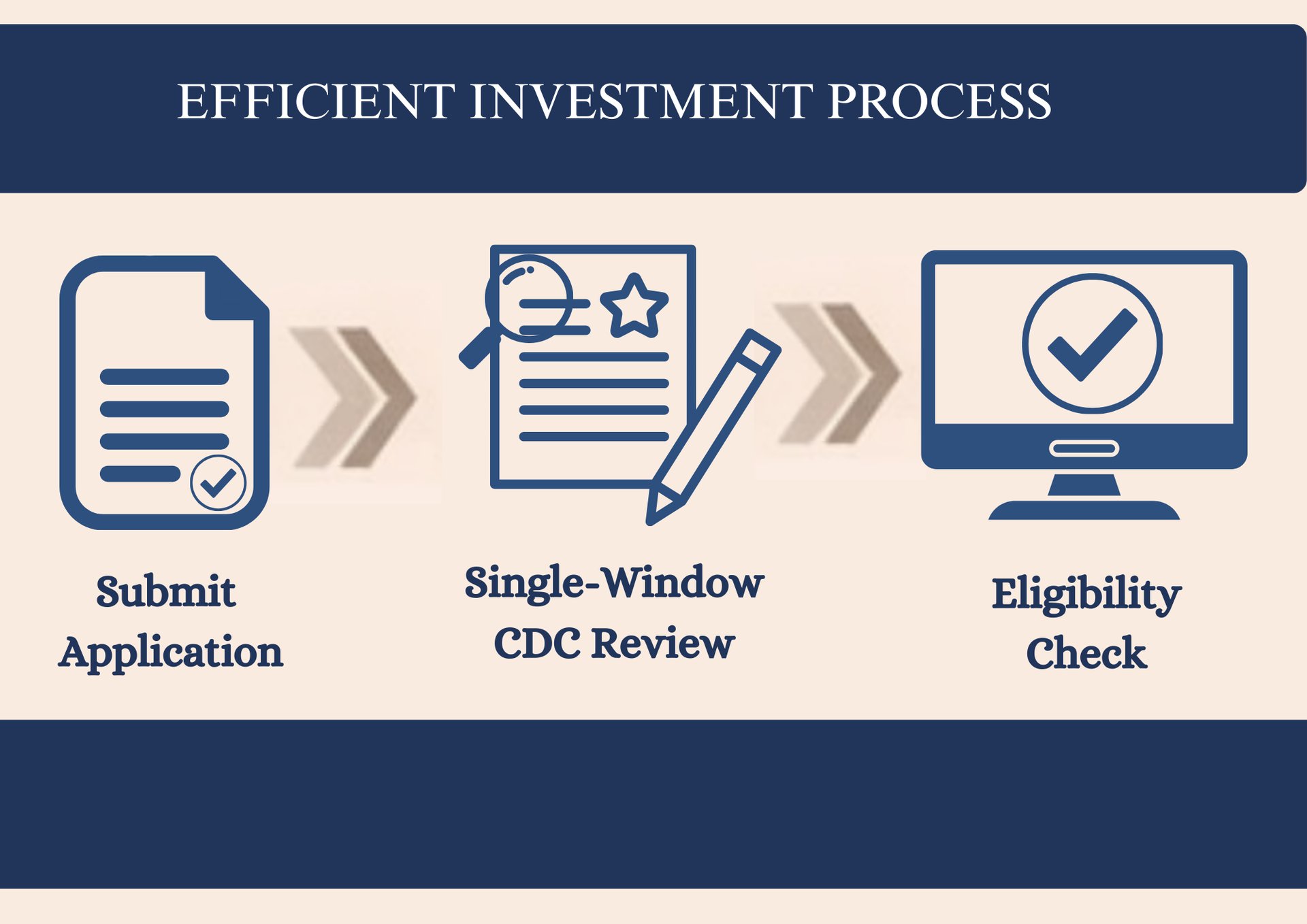
Investment project proposals are reviewed through a single-window service by the Council for the Development of Cambodia (CDC). If the proposed investment project is not on the “negative list”, the CDC shall issue the Registration Certificate within 20 working days. Upon receipt of the invest project Application, the Council for the Development of Cambodia shall review and make a decision on the application through a single-window service mechanism.
After the IT exemption period has expired, the QIP is entitled to pay more income tax at a progressive rate proportional to the total tax due as follows:
Consistent, Sustainable Growth
Remarkable economic growth, consistent business environment, and care for sustainability
Connecting Trade Infrastructure
Favorable trade agreements, growing logistical infrastructure, and proximity to key market
Competitive Workforce
Young & energetic talent, increasingly proficient, and competitive wages
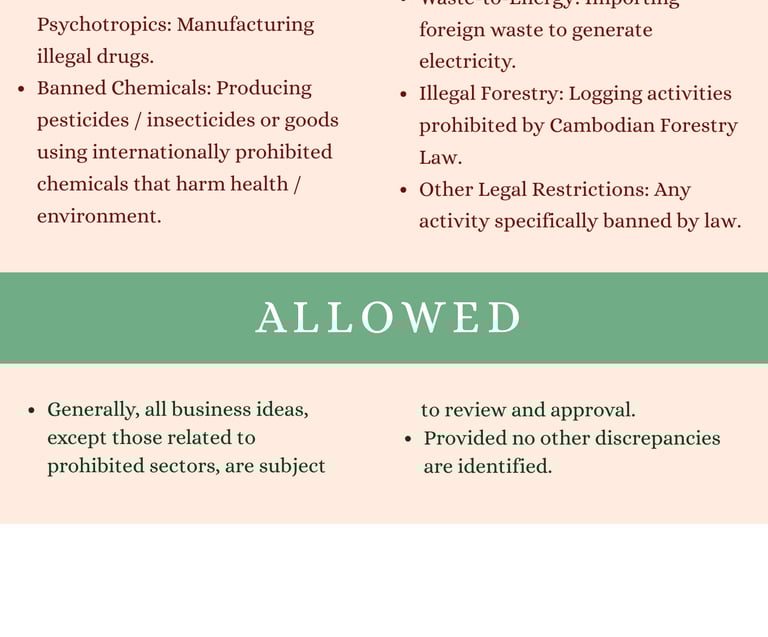
Investors—foreign and domestic—are guaranteed fair and equal treatment
Market-driven operations
No requirement for local equity participation
Investors are protected through provisions for restitution, compensation
Prices are not fixed for products and services of Investment
FEATURES OF THE ECONOMY

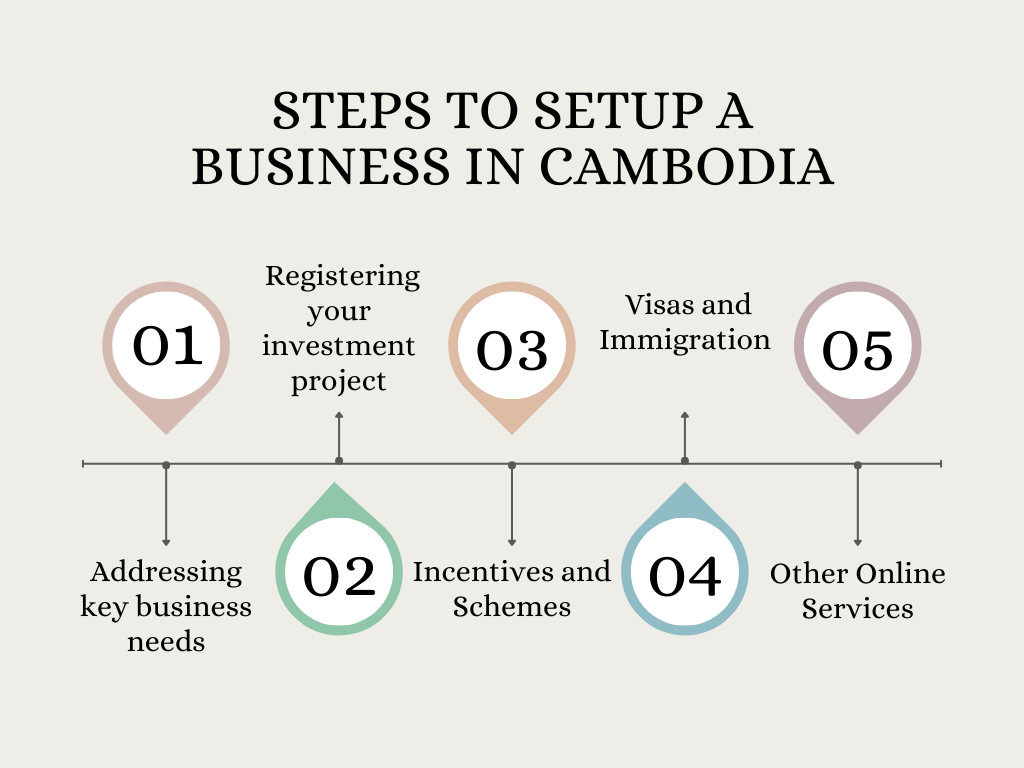
1. Addressing key business needs
Before any investment project can commence its operation in Cambodia, it is important for project owners to be aware of any regulatory compliance and requirement. Subsequently, you may proceed with recruitment, financing, and property procurement. For more details and guidelines, visit our last resources.
2. Registering your investment project
Following the checklist on our website, you can prepare your documents accordingly and submit at the reception desk (one-stop service). Registering your investment project can also be done online at https://qip.cdc.gov.kh/login. Once all required documents are submitted, registration certificate will be issued within 20 (twenty) working days.
3. Incentives and Schemes
The Cambodian government offers generous incentives to investors help boost sustainable and robust economic development. To check your eligibility for QIP status, please visit Incentives and Schemes. For investments in SEZ, you can find further information about SEZ success story and other leading companies at SEZ
4. Visas & Immigration
According to article 22 of the law on investment of the Kingdom of Cambodia promulgated on 15 October 2021, the Council for the Development of Cambodia or the Municipal-Provincial Sub-Committee shall issue a letter to certify the investment status for the persons involved in the Investment Project at the request of the Investor to be used for applying for a temporary long-term stay permit, work permit and employment book and other necessary purposes in accordance with the procedures in force. Special procedures for applying for work permits and employment book as stated in this article shall be set out in the joint Prakas of the Council for the Development of Cambodia and the Ministry in charge of Labor. Procedures and special procedures for applying for a temporary long-term stay permit as stated in this article shall be determined by a separate Sub-Decree.
5. Other Online Services
We provide innovative ways of investment facilitation in part of the efforts to streamline the approval process via online platform. You can request for a simpler import duty exemption of items to be used in the investment project at the implementation process through Master List Online linked with the National Single Window. You can also find a domestic qualified suppliers of production inputs in Cambodia by accessing to the Supplier Database with Sustainability Dimensions (SD2).

INCENTIVES & SCHEMES
High-tech Industries involving Innovation or Research and Development
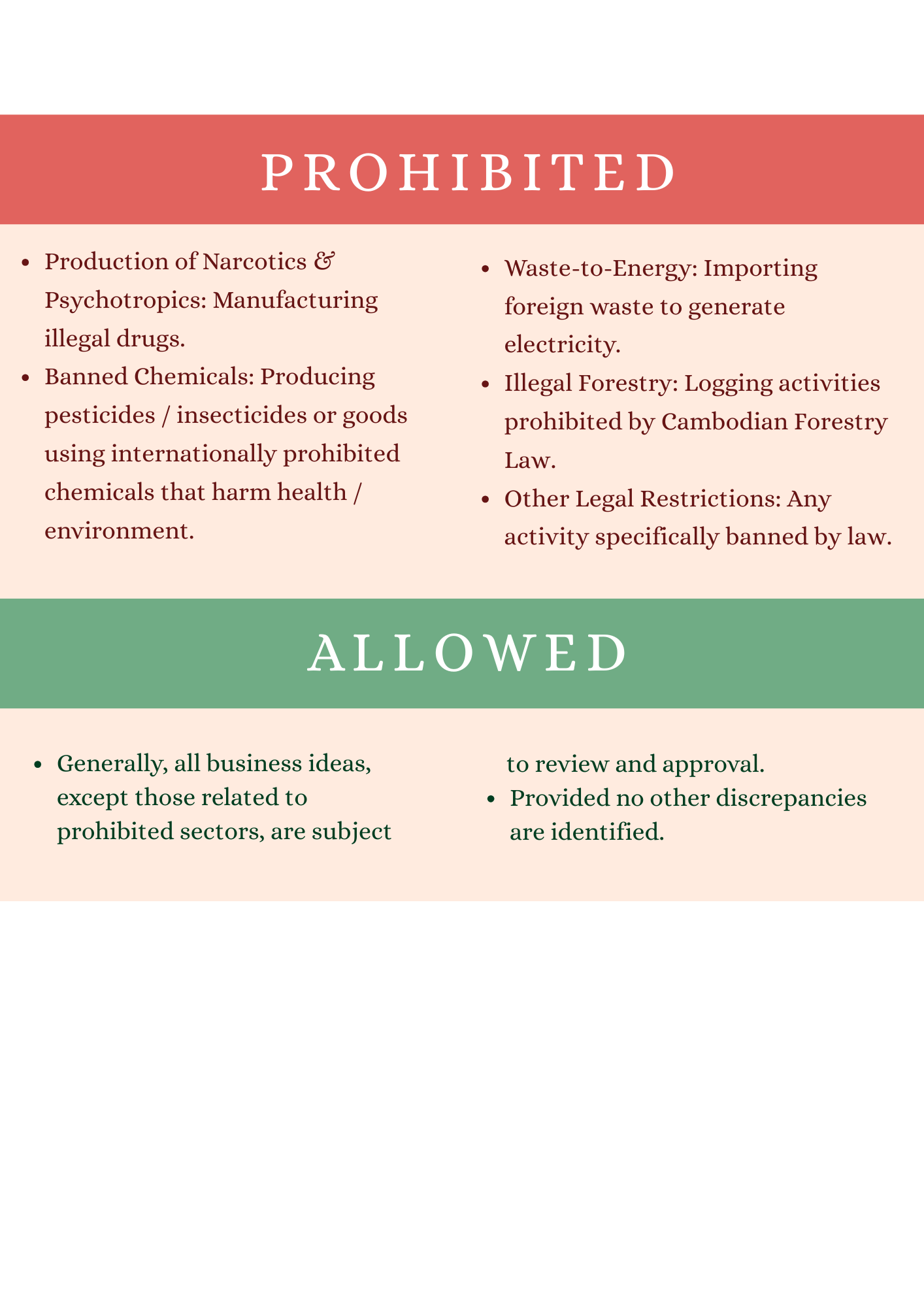
Under the LoI (Chapter 6), 19 investment sectors (listed in Article 24 of the LoI) – if they are not on the Negative List (still to be defined in a Sub-Decree) – shall receive investment incentives after obtaining a Registration Certificate certifying their QIP status. The incentivized sectors are:
Other sectors and investment activities not listed by the LoI deemed by the Royal Government of Cambodia to have potential for socio-economic development.
● Basic Incentives
Investment activities registered as QIP are entitled to choose between 2 basic incentives.
● Additional Incentives
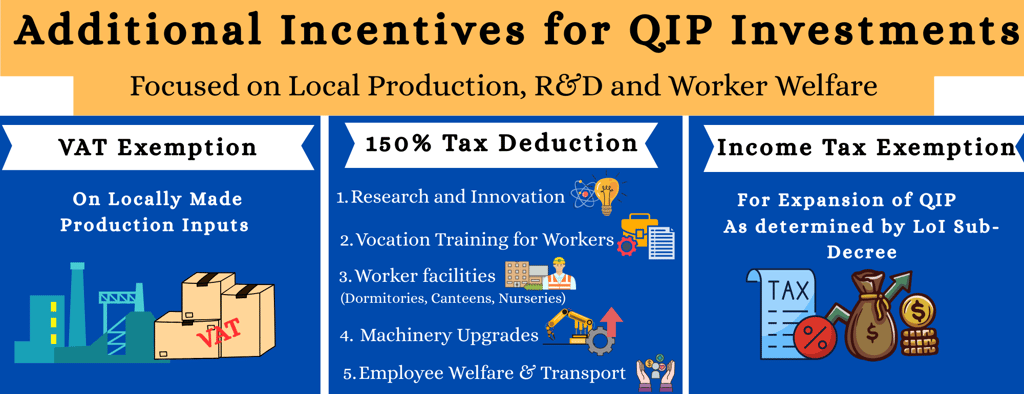
In addition to the basic incentives, investment activities registered as QIP receive additional incentives, which are very much focused on advancing local production, R&D and improving the working conditions of local employees:
● Special Incentives
Special incentives In addition to basic incentives and additional incentives, this law paves the way for the Royal Government to provide special incentives to specific sectors and investment activities that have high potential to contribute to national economic development, which are identified in Financial Law for Management.
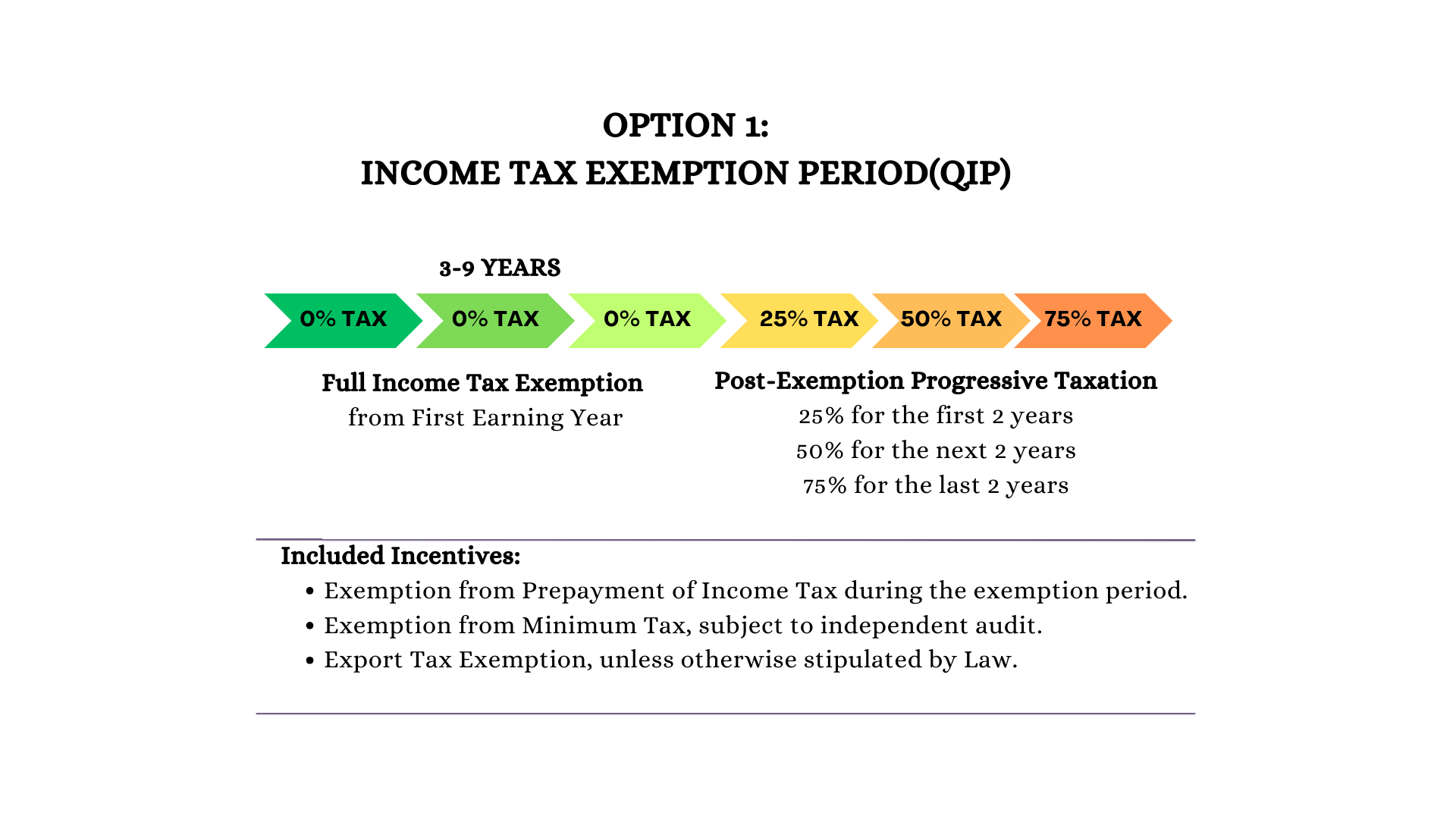
Option 1: Tax Exemption Period :
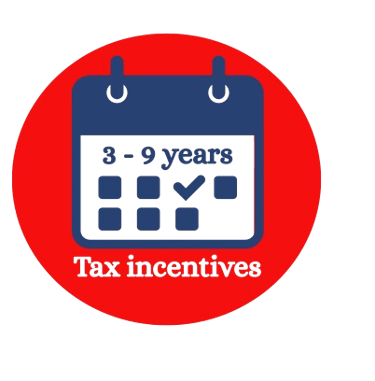
An Income Tax exemption for 3 to 9 years, depending on the sector and investment activities, from the time of earning of first income. Sectors and investment activities, as well as the period of income tax exemption, shall be determined in the law on financial management and/or the LoI Sub-Decree.
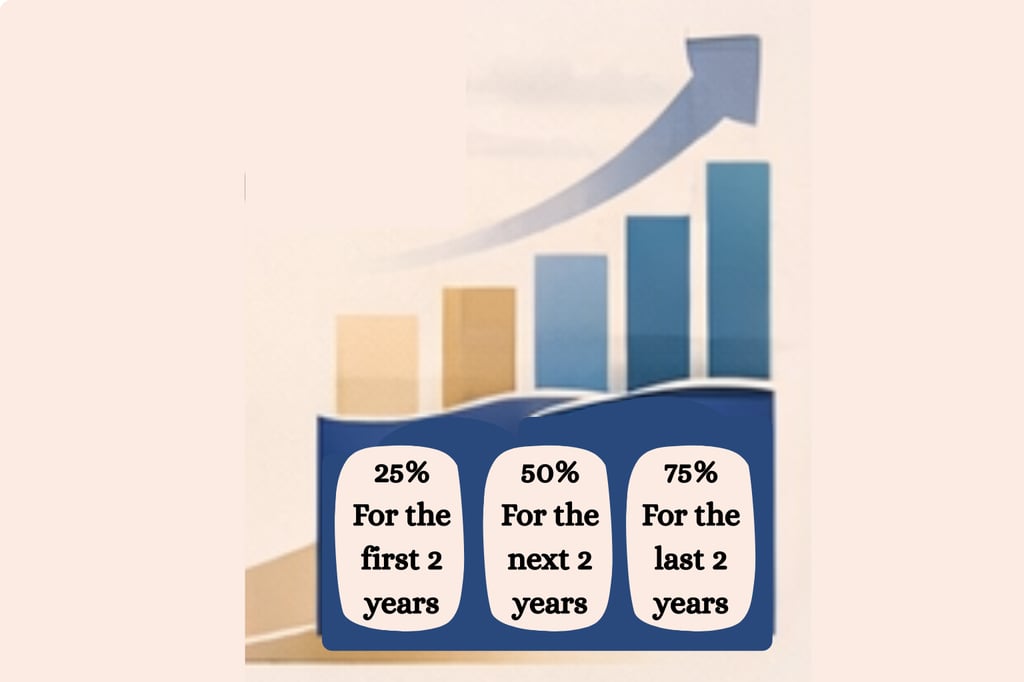
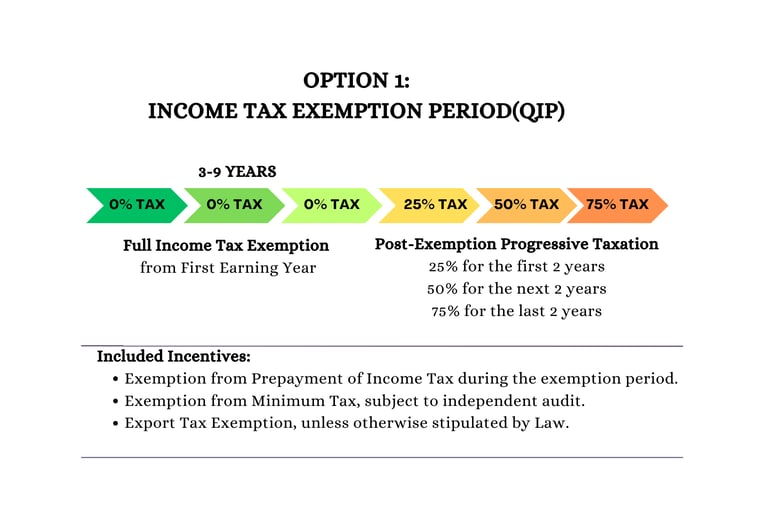
After the income tax exemption period has expired, the QIP’s income tax will only increase gradually over 6 years, at a progressive rate proportional to the total tax due as follows: 25 % for the first 2 years, 50 % for the next 2 years and 75% for the final 2 years.
Further, this option includes:
– Prepayment Tax exemption during income tax exemption period;
– Minimum Tax exemption provided that an independent audit report has been carried out;
– Export Tax exemption, unless otherwise provided in other laws and regulations.



– Value-added tax exemption for the purchase of locally made Production Inputs for the implementation of the QIP.
– Deduction of 150 % from the tax base for any of the following activities:
a. Research, development and innovation;
b. Human resource development through the provision of vocational training and skills to Cambodian workers/employees;
c. Construction of accommodation, food courts or canteens where reasonably priced foods are sold, nurseries and other facilities for workers/employees;
d. Upgrade of machinery to serve the production line; and
e. Provision of welfare for Cambodian workers/employees, such as comfortable means of transportation to commute from their homes to factories, accommodation, food courts or canteens where foods are sold at reasonable prices, nurseries and other facilities.
– Entitlement to income tax exemption for the Expansion of QIP which will be determined in the LoI Sub-Decree.




Small and Medium-Sized Enterprises in Priority Sectors and Small and Medium-Sized Enterprise Cluster Development, Industrial Parks, and Science, Technology and Innovation Parks
Tourism and Tourism-Related Activities
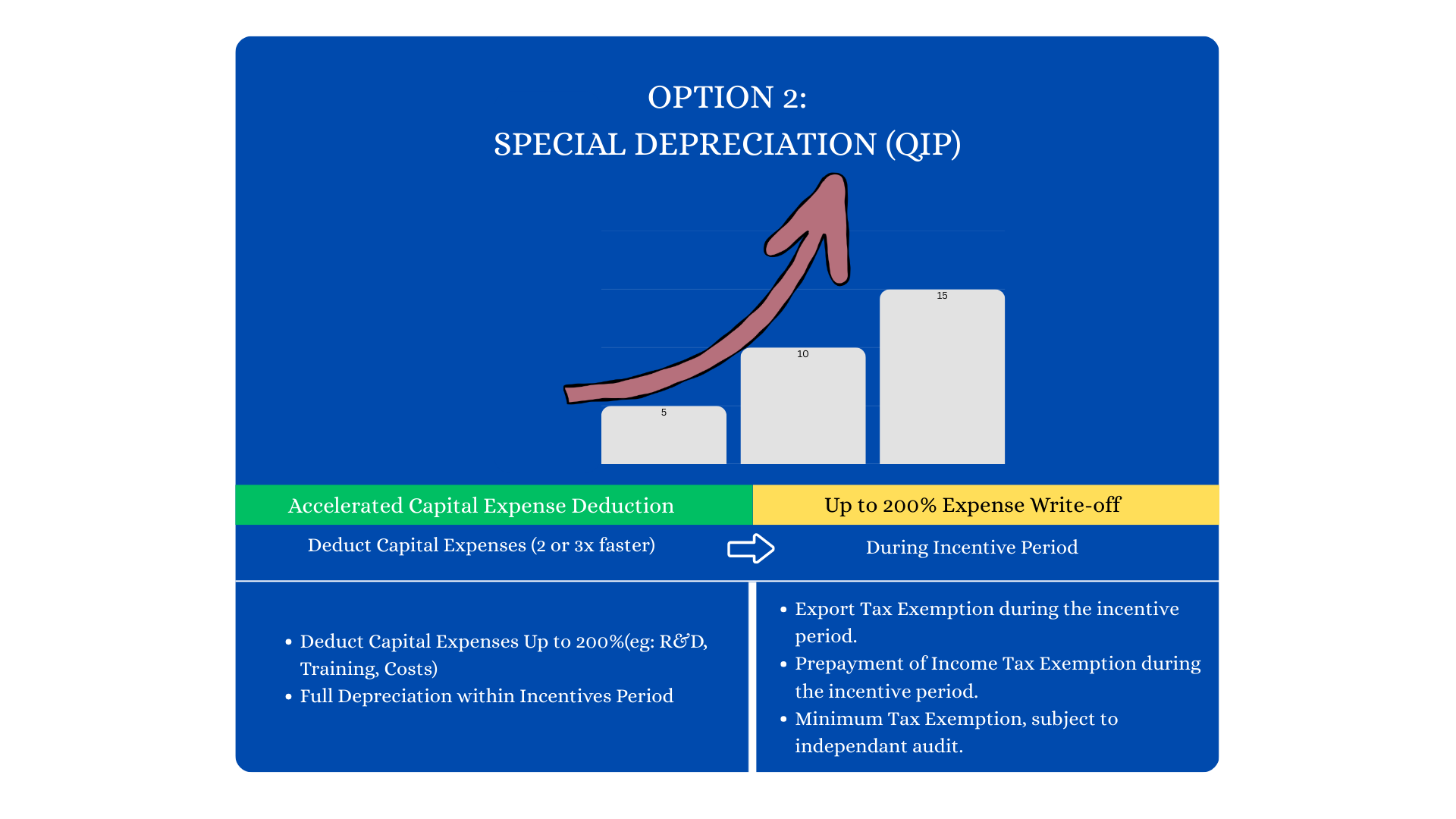
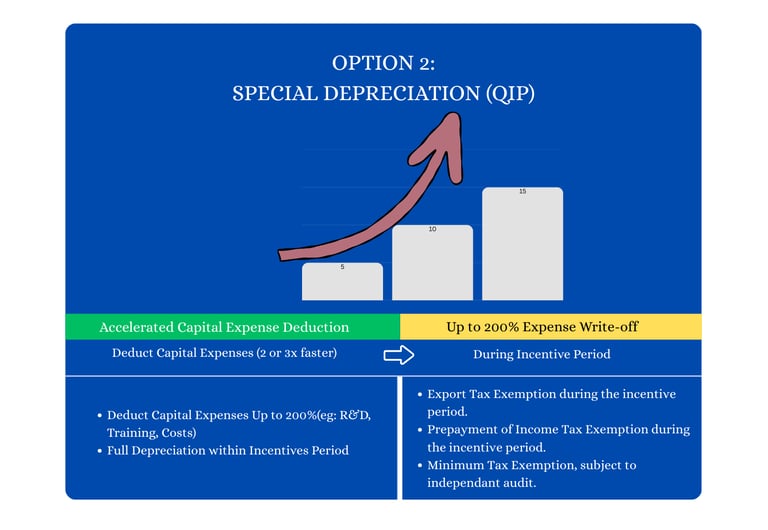
Option 2: Special Depreciation:
The second option for basic incentives entails:
– Deduction of capital expenditure through special depreciation as stated in the tax regulations in force;
– Eligibility of deducting up to 200 % of specific expenses incurred for up to 9 years. Sectors and investment activities, specific expenses, as well as the deductible period, shall be determined in the Law on Financial Management and/or the LoI Sub-Decree;
– Prepayment Tax exemption for a specific period of time based on sectors and investment activities to be determined in the Law on Financial Management and/or the LoI Sub-Decree;
– Minimum Tax exemption provided that an independent audit report has been carried out; and
– Export Tax exemption, unless otherwise provided in other laws and regulations.
In addition to the incentives of option 1 or option 2:
A. Export QIP and Supporting Industry QIP are entitled to customs duty, special tax and value-added tax exemption for the import of Construction Material, Construction Equipment, Production Equipment and Production Inputs;
B. Domestically Oriented QIP is entitled to customs duty, special tax and value-added tax exemption for the import of Construction Material, Construction Equipment, and Production Equipment. The incentives for Production Inputs shall be determined in the Law on Financial Management and/or the LoI Sub-Decree.
Industries Supplying Regional and Global Production Chains
Innovative or Highly Competitive New Industries or Manufacturing with High Added Value
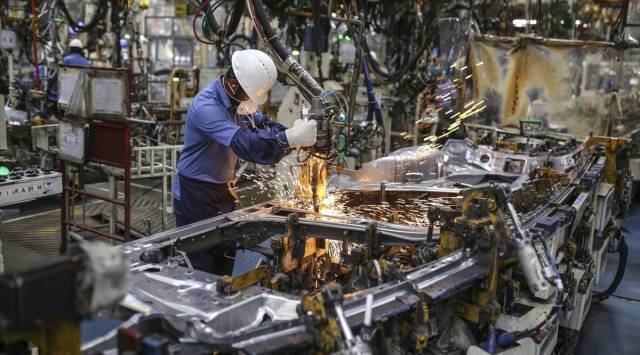


Electrical and Electronic Industries


Industries supporting Agriculture, Tourism, Manufacturing, Regional and Global Production Chains and Supply Chains
Spare Parts, Assembly and Installation Industries
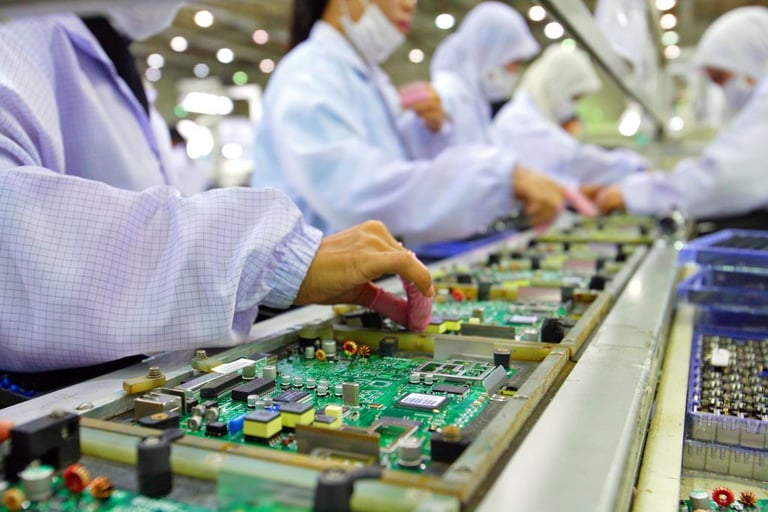



Mechanical and Machinery Industries
Agriculture, Agro-industry, Agro-processing Industry and Food Processing Industries serving the Domestic Market or Export




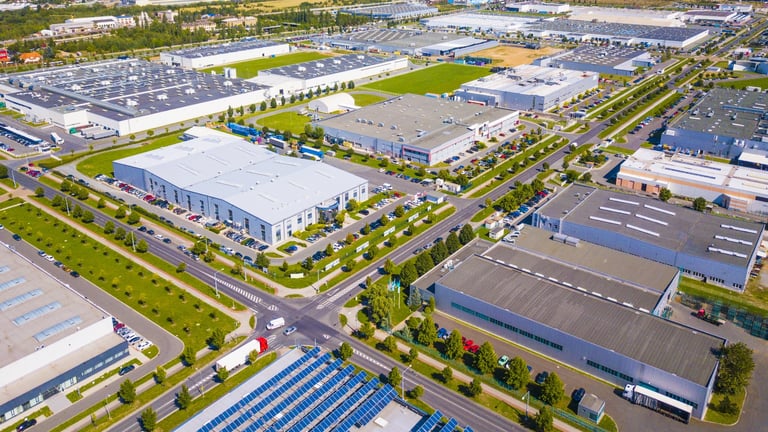







Special Economic Zones
Digital Industries
Education, Vocational Training and Productivity Promotion
Health


Physical Infrastructure




Logistics
Environmental Management and Protection, and Biodiversity Conservation and The Circular Economy
Green Energy, Technology Contributing to Climate Change Adaptation and Mitigation







Article 56 of the Cambodian Constitution declares that Cambodia shall adopt a market economy system. The Constitution further says in Article 61 that the State shall promote economic development in all sectors and remote areas, especially in agriculture, handicrafts, and industry, with attention to policies concerning water, electricity, roads and means of transport, modern technology and a system of credit.
PRINCIPLES OF ECONOMIC MANAGEMENT
New Article 10 of the Law on the Amendment to the Law on Investment (The Amended Law on Investment) also guarantees that the Cambodian Government
Investing in Cambodia 2026:
https://practiceguides.chambers.com/practice-guides/investing-in-2026/cambodia
shall not fix the price or fee of products or services of an approved Qualified Investment Project (QIP), which is also entitled for investment incentives (see “Chapter IV INVESTMENT”). Thus, Cambodia provides economic and business activities with the most open and freest environment. Article 56 of the Cambodian Constitution declares that Cambodia shall adopt a market economy system. Please refer to this document for more details:
https://cdc.gov.kh/wp-content/uploads/2022/04/LOI_English-Updated-13Dec21.pdf
Address
Honorary Consulate of Cambodia, #3, Kengal Hanumanthaiah Rd, Bheemanna Garden, Shanti Nagar, Bengaluru, Karnataka 560027
Contact:
Phone: (+91) 80 4130 6767 ,
E-Mail: hc@cambodiaconsulate.in , yashi.dhariwal@cambodiaconsulate.in
Phone (for appointment schedule): (+91) 73489 22646
(+91) 80 2224 2999 , +91 98 44210133